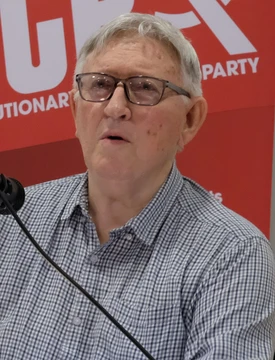
Phyllis Schlafly
Conservative activist who defeated the Equal Rights Amendment.

She is best known for leading the successful campaign against the ratification of the Equal Rights Amendment to the U.S. Constitution and for founding the conservative interest group Eagle Forum.
- born
- August 15, 1924
- died
- September 5, 2016
- field
- Activism, law, politics
- nationality
- American
- known_for
- Opposing the Equal Rights Amendment; founding Eagle Forum; writing *A Choice Not
Verified Timeline
Lore & Background
Louis. During World War II, she worked as a ballistics technician at the largest ammunition plant in the world. Schlafly ran for Congress three times as a Republican in Illinois but lost each general election. In 1952, she lost the Republican primary to William L. Springer. Shipley. She never sought public office again. In 1972, Schlafly founded the Eagle Forum and remained its chair and CEO until her death. She organized the STOP ERA campaign, arguing the amendment would remove privileges such as dependent wife benefits, separate restrooms, and draft exemption. Her opposition is widely credited with defeating the ERA, which was ratified by only 35 states.
Reader's Guide
Phyllis Schlafly's significance lies in her role as a central figure in the conservative movement of the late 20th century. Her opposition to the Equal Rights Amendment transformed a seemingly inevitable constitutional change into a defeated proposal, reshaping American gender politics. By mobilizing grassroots conservative women, she demonstrated the power of organized anti-feminist activism and helped shift the Republican Party toward social conservatism. Schlafly's legacy is contested: supporters credit her with defending traditional family roles and religious values, while critics argue she hindered legal equality for women. Her work through the Eagle Forum continued to influence conservative causes until her death in 2016. The debate over the ERA's defeat remains a key case study in how a well-organized minority can block a widely supported amendment.
Did You Know?
- Phyllis Schlafly worked as a ballistics technician at the largest ammunition plant in the world during World War II.
- She earned a Juris Doctor from Washington University School of Law in 1978, after her political career was well underway.
- Her self-published book *A Choice Not an Echo* sold or distributed over three million copies.
- Schlafly was a member of the John Birch Society and never publicly denied her membership.
The Mythological Roots of the Name
The name Phyllis traces its lineage to ancient Greek, where it carries the meaning of foliage. In the mythological tradition, a woman named Phyllis was the wife of Demophon, king of Athens. When Demophon failed to return to her, she took her own life in grief. The gods, moved by her devotion, transformed her into an almond tree. This tale of loss and metamorphosis became one of the most enduring associations with the name. Beyond this central legend, the name appears in other mythological contexts: as a river god, as the consort of Ereuthalion, and as the mother of the Trojan figure Alcaeus. The medieval legend of Phyllis and Aristotle also attached the name to a story of romantic devotion, though this was likely a later literary invention. These layered mythological references gave the name a poetic and melancholy resonance that would echo through centuries of its usage, lending it a sense of ancient sorrow and natural beauty that distinguished it from many other Greek-derived names.
A Name Carried Through Literature and Popularity
The name entered modern English usage in the 17th century, often rendered as Phillis, through the poetry of John Wilmot, 2nd Earl of Rochester, and Matthew Prior, who likely drew it from the supposed mistress of Aristotle or other classical references. The spelling Phyllis gained a major boost in the late 1800s when Irish novelist Margaret Wolfe Hungerford made it the title of her 1877 romantic novel, Phyllis, the Duchess. By 1880, the name had entered the top 1,000 for newborn American girls, and its popularity climbed steadily through the early 20th century. The actress Phyllis Haver, active from the 1920s through the 1950s, further raised the name's public profile. It reached its zenith in 1929, ranking as the 24th most popular name for American girls. The name maintained a presence in the top 1,000 until 1950, after which its usage gradually declined. Across the broader Anglosphere, including Australia, Canada, New Zealand, and the United Kingdom, the name enjoyed its greatest favor in the first half of the 20th century.
The Name in the Shadow of Slavery
The history of the name in America carries a deeply painful dimension that cannot be separated from its broader cultural story. The African-born poet Phillis Wheatley, born around 1753, was captured and brought into enslavement in the United States. Her enslavers gave her the name Phillis, reportedly after the slave ship on which she had arrived. Despite the violence of her circumstances, Wheatley went on to become a recognized poet and was eventually freed. The name Phillis was notably popular among enslaved women in the United States, a fact that imbues it with a complex legacy of both oppression and resilience. This thread of the name's history runs parallel to its more genteel associations in European literature and American popular culture. The same name that adorned the heroine of a romantic novel or graced the stage of a vaudeville comedian also marked the identities of women who had been torn from their homelands and forced into bondage. These dual histories coexist within the name's American story, and any full account of Phyllis must acknowledge both strands.
A Name Shared Across Borders and Disciplines
The name Phyllis has been carried by women spanning an extraordinary range of fields and nationalities. In the arts, it belongs to the American comedian Phyllis Diller, the British ballerina Phyllis Bedells, the Australian dancer Phyllis Danaher, and the American animator Phyllis Barnhart. In science and medicine, it is the name of the American physicist Phyllis Bolds, the Australian pathologist Phyllis Margery Anderson, and the American paleoecologist Phyllis Draper. In politics and activism, it appears in the Jamaican-Grenadian revolutionary Phyllis Coard, the Ugandan politician Phyllis Chemutai, and the West Indian socialist activist Phyllis Shand Allfrey. In sports, it belongs to the English long jumper Phyllis Bartholomew, the American Olympic equestrian Phyllis Dawson, and the Bermudian sprinter Phyllis Edness. The name also connects to literature, architecture, music, and law across the United States, Britain, Canada, Australia, New Zealand, Jamaica, Ghana, and Uganda, making it a small constellation of diverse lives and achievements.
Frequently Asked Questions
Who is Phyllis Schlafly?
Phyllis Schlafly was an American attorney and political activist who rose to national prominence within the conservative movement. She was born on August 15, 1924, and died on September 5, 2016.
What is Phyllis Schlafly most famous for?
She is best remembered for spearheading the campaign that ultimately blocked the Equal Rights Amendment from being ratified into the U.S. Constitution. She also founded the conservative advocacy organization known as the Eagle Forum.
What book did Phyllis Schlafly write?
Her 1964 self-published work *A Choice Not an Echo* went on to sell or circulate more than three million copies. The book played a significant role in helping Barry Goldwater secure the Republican presidential nomination that year.
What organization did Phyllis Schlafly found?
She established the Eagle Forum, a conservative interest group that became a major voice in American politics. The organization served as a long-running platform for her advocacy on social and legal issues.
What field was Phyllis Schlafly active in?
She worked across activism, law, and politics throughout her career. Her primary area of public influence was conservative political advocacy, particularly around constitutional and family-related issues.
More in Modern Political Activists And Theorists 1-24
Elsewhere in the Modern Political Activists And Theorists universe
Spotted an error? Know more?
This is a living reference — every entry is fact-audited, and reader corrections feed straight into our audit queue. Suggest an edit · See this site's audit record